ICC to Empower Umpires Against Illegal Bowling Actions: The Usman Tariq Impact
A New Era for Cricket Officiating
In a significant shift for the sport, the International Cricket Council (ICC) is preparing to implement sweeping changes to playing conditions. Under the leadership of the council headed by Jay Shah, a crucial meeting is scheduled for May 30 in Ahmedabad. During this session, the governing body is expected to deliberate on and finalize amendments that could fundamentally alter how matches are officiated, with a specific focus on the integrity of bowling actions.
Empowering the Men in the Middle
For years, the process of identifying and penalizing illegal bowling actions has been criticized as cumbersome and reactive. Currently, on-field umpires are largely powerless to address concerns regarding a bowler’s delivery during the heat of a game. Instead, the responsibility falls on an ICC committee, which typically evaluates actions only after a series has concluded. This delay has often led to frustration among players and fans alike.
Reports indicate that the ICC is now looking to change this dynamic by providing on-field umpires with access to HawkEye data. By integrating this technology directly into the decision-making process, officials may soon have the tools to identify and potentially penalize illegal actions in real-time. This proactive approach underscores the ICC’s determination to eliminate suspect bowling actions from the game entirely.
The Usman Tariq Controversy
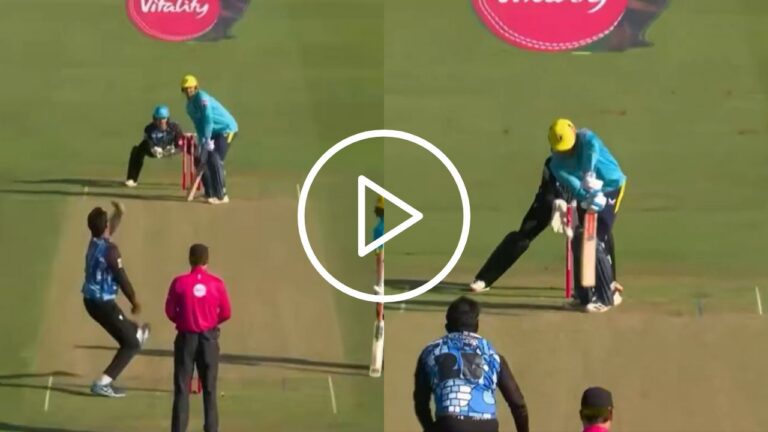
The timing of these proposed rule changes has naturally drawn attention to players whose bowling actions have already sparked debate. Among them is Pakistan spinner Usman Tariq. His unique, unconventional delivery style has caught the eye of numerous professional cricketers and analysts, leading to calls for closer inspection.
The scrutiny reached a boiling point during Australia’s tour of Pakistan. Australian all-rounder Cameron Green publicly questioned Tariq’s action, going as far as gesturing to the umpires during the match to express his concerns. Although Green later issued an apology to Tariq, the incident highlighted the growing tension surrounding the spinner’s delivery. The controversy continued into the 2026 PSL, where Daryl Mitchell expressed his discomfort by backing away from his stance twice, clearly signaling his dissatisfaction with Tariq’s action.
The Technicalities of the Law
It is important to note that the ICC’s definition of an illegal bowling action remains rooted in physics. According to the official playing conditions, a bowling action is considered illegal if the player’s elbow extension exceeds 15 degrees between the arm reaching the horizontal position and the point of ball release. This 15-degree threshold serves as the standard benchmark for all international bowlers.
Despite the skepticism from peers, it is worth noting that Usman Tariq has previously undergone testing at the ICC centre in Lahore, where his action was evaluated and officially cleared. Former ICC umpire Anil Chaudhary has previously commented on the nuances of such actions, noting that unless a pause in the delivery becomes deceptive or falls outside the standard parameters, there is often nothing inherently wrong with a unique style.
What Lies Ahead
As the ICC prepares to pass these new amendments, the focus will undoubtedly shift toward how effectively umpires can utilize technology on the field. If successfully implemented, these rules will grant officials the authority to make immediate calls, potentially ending the era of long-drawn-out investigations into suspicious actions. For players like Usman Tariq, the new regulations will serve as a definitive test, proving whether their actions remain within the 15-degree limit when scrutinized under the watchful eye of both technology and the officials on the ground.
As we look toward the future of the game, the ICC’s commitment to fairness and clarity remains paramount. Whether these changes will fully resolve the long-standing issues surrounding bowling integrity will become clear in the coming months as the new playing conditions take effect.

Related Articles